 EN
EN Pyccкий
 May 22,2026
Food packaging factories are under increasing pressure to balance speed, consistency, and cost control. While many people assume that production efficiency is mainly about output speed, real factory experience shows a different reality. Stability is often more important than speed itself.
In many production lines, inefficiencies do not come from the machine running slowly, but from unexpected interruptions, unstable forming quality, and variations between shifts. These issues gradually increase operational costs and reduce delivery reliability.
A production supervisor from a packaging plant once summarised the situation simply: production does not fail because it is slow; it fails because it is inconsistent.
This is why automation in food container forming has become a major focus for manufacturers.
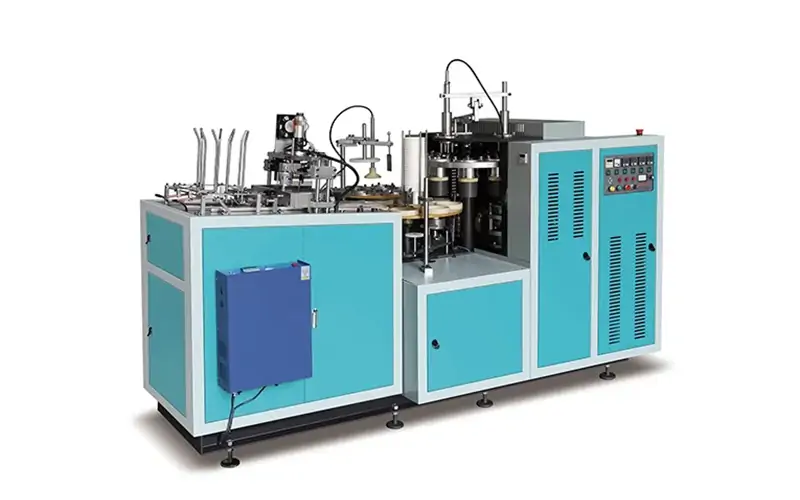
Improving production stability in real operations
In traditional setups, instability often appears during long production cycles. Small mechanical variations or manual feeding differences can lead to inconsistent product quality.
These inconsistencies may result in uneven bowl shapes, sealing issues, or increased rejection rates during inspection. Over time, even minor defects accumulate into significant material and labour losses.
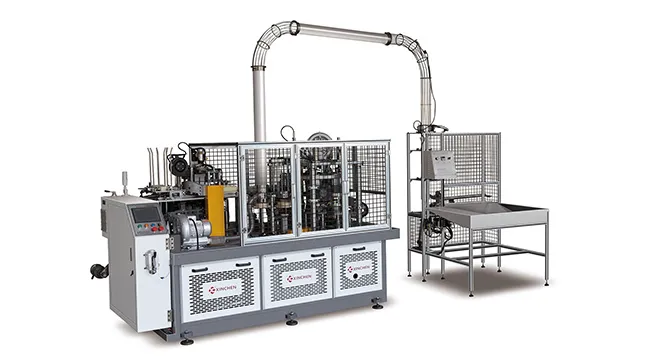
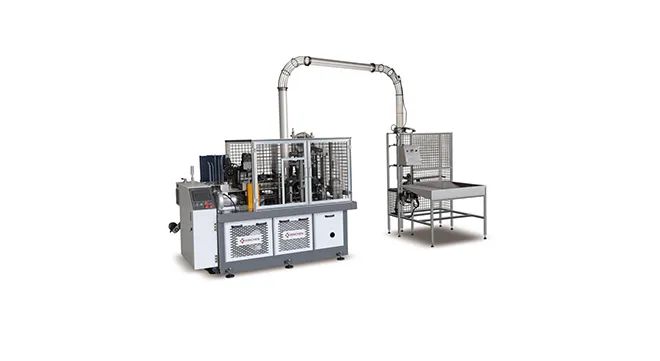
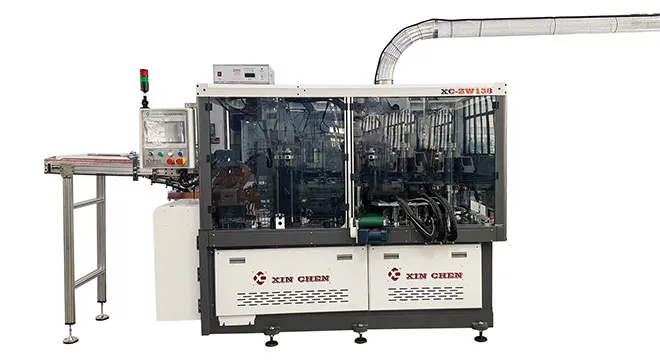
Modern automated forming systems are designed to synchronise feeding, heating, and shaping more precisely. This reduces variation between production batches and helps maintain consistent output over long operating hours.
Factories adopting high-efficiency container forming solutions for continuous production environments often report that stability improvement has a greater impact on profitability than raw speed upgrades.
Why consistency matters more than maximum speed
In packaging production, maximum machine speed is often used as a selling point, but real production environments tell a more practical story. When speed increases without proper stability control, defect rates also tend to rise.
Common issues include overheating during continuous runs, uneven edge curling, and inconsistent sealing strength. These problems are especially critical for food service packaging, where leakage or deformation can lead to customer complaints.
A stable production process ensures that every unit maintains the same quality standard, regardless of production time or operator shift. This consistency is what allows manufacturers to work reliably with large food chains and delivery platforms.
Reducing waste through controlled automation
Material waste is another hidden cost in packaging production. It often comes from inaccurate feeding, trimming deviations, or inconsistent calibration during manual adjustments.
When production conditions are not stable, even small errors can lead to large amounts of rejected output. Over time, this becomes a major cost factor that many factories underestimate.
Automation helps reduce these issues by maintaining consistent forming pressure and temperature control throughout the production cycle. This leads to more predictable material usage and fewer defective units.
Manufacturers focusing on long-term cost efficiency often prefer stable food-grade container production systems for high-volume operations because material savings accumulate significantly over time.
Labor pressure and operational efficiency
Labour management has become increasingly difficult in the packaging industry. Many factories struggle with hiring experienced operators and maintaining consistent performance across different shifts.
Manual processes often require constant supervision, and fatigue can lead to inconsistent results. Automation reduces dependency on manual intervention by handling repetitive tasks such as feeding, forming, and stacking.
As a result, operators can focus more on monitoring and quality control rather than repetitive mechanical work. This shift improves overall operational efficiency and reduces human error in daily production.
Hygiene requirements and food safety standards
Food packaging is directly connected to hygiene compliance, especially for export-oriented manufacturers. Regulations related to food-contact materials, cleanliness, and sealing integrity are becoming stricter in many regions.
Modern equipment is designed with improved structural layouts that reduce contamination risk and simplify cleaning procedures. Stable forming systems also help maintain consistent sealing quality, which is essential for food safety.
Upgraded systems,s such as automated forming lines designed for hygienic food packaging production environments, ts are increasingly used in factories supplying restaurants, catering services, and frozen food markets.
Material flexibility and sustainability trends
The packaging industry is shifting toward more sustainable materials such as coated paper and biodegradable substrates. However, these materials often behave differently during forming compared to traditional materials.
They may react differently to heat, pressure, and moisture, which requires more precise control during production. Without proper system stability, material deformation and sealing issues can become more frequent.
Modern forming systems are increasingly designed to handle these variations, allowing manufacturers to adapt to different material types without major production disruptions.
Smarter production monitoring
Another important improvement in modern packaging systems is real-time monitoring. Instead of relying on manual inspection after production, operators can now track machine performance continuously.
This includes temperature stability, forming pressure consistency, and production output tracking. When abnormalities occur, alerts can be triggered early, reducing downtime and waste.
This approach improves overall production visibility and helps factories plan maintenance more effectively.
Choosing the right production approach
When selecting equipment, many manufacturers initially focus on speed or purchase cost. However, long-term experience shows that stable operation, maintenance convenience, and material adaptability are more important factors.
A well-balanced system provides consistent output, lower waste rates, and reduced operational stress. These advantages are more valuable than short-term production speed improvements.
For factories planning upgrades, exploring efficient forming solutions for modern food packaging production lines can help identify configurations that better match long-term production needs.
Conclusion
Food packaging efficiency is no longer defined only by how fast a machine runs. Stability, waste control, labour efficiency, and material adaptability all play equally important roles.
As the industry continues to evolve, manufacturers that focus on consistent and automated production systems are better positioned to maintain competitiveness and reduce long-term operational costs.
Xinchen provides solutions designed to help factories improve production stability while supporting modern food packaging requirements.