 EN
EN Pyccкий
 May 24,2026
It’s a typical Monday morning. A fast-growing bubble tea chain owner stares at a stack of invoices from disposable cup suppliers. The monthly cost has doubled in six months. The idea of in-house production suddenly seems not just attractive, but essential. Yet, the moment you start researching equipment, you’re flooded with specs: 60 cups per minute, 100 cups per minute, ultrasonic sealing, servo-driven, PE, PLA… It’s enough to make anyone’s head spin.
The frustration is real. One café owner we spoke to admitted buying a unit based solely on price, only to discover it couldn’t handle the 16-oz cups his new smoothie line demanded. Another had to halt production every afternoon because the forming station overheated. Choosing the wrong equipment isn’t just an inconvenience — it’s a direct hit to your margins and growth potential.
So, how do you cut through the noise? Instead of treating this as a simple purchase, approach it as a strategic decision that balances today’s orders with tomorrow’s ambitions. Let’s break down the five dimensions that truly matter.
1. Real Output vs. Rated Speed
It’s tempting to focus on the headline “maximum speed.” But rated speed often refers to a specific cup size under ideal conditions. If your bestselling product is a 12oz double-wall cup, the sustainable running speed of a paper cup machine may be 15-20% lower than the catalogue number. A better approach: calculate your current peak hourly demand, then add at least 30% headroom. That way, the equipment isn’t running at redline for an entire shift.
Equally important is acceleration and stoppage behaviour. Does the feeder jam frequently on lightweight stock? Is the counting system accurate enough to avoid waste? Ask for video proof of a real production run, not just a demo loop. If you anticipate seasonal spikes — think iced coffee in summer — look for a design that allows you to add forming stations later. Scalable cup-forming systems that grow with your demand prevent you from outgrowing your investment within two years.
2. Cup Range and Changeover Agility
Your menu isn’t static. Today you need 8oz and 12oz cups; next quarter, the marketing team wants a speciality 10oz rippled cup for a limited collection. Every time you switch sizes, downtime eats into profit. Therefore, examine the mould-changing mechanism: is it a quick-release design that an operator can handle in under 20 minutes, or does it require a technician and half a shift?
Consider the full span from bottom diameter to top curl width. Some machines lock you into a narrow range, forcing you to buy a second unit when you venture into a different format. A modular platform that shares a common drive system but accepts different forming turrets gives you agility without duplicating your capital expenditure. Also, check if the cup rim curling station can be adjusted digitally or requires manual trial-and-error shims. Faster changeovers mean you can take on short-run private label jobs — an increasingly lucrative side business.
3. Material Compatibility: Beyond Standard PE
Sustainability isn’t a trend anymore; it’s a license to operate. Many chains now specify PLA-lined, water-based barrier, or even uncoated board for certain applications. This is where a second-generation paper cup machine truly proves its worth. The heating and sealing dynamics of PLA are completely different from PE — the temperature window is narrower, and the dwell time must be precisely controlled to avoid brittle seams or leaks.
If your customer base includes venues that require composability certifications (such as EN 13432), your production equipment must ensure consistent, verifiable seam integrity. Look for multi-zone temperature control and real-time quality monitoring. Some forward-thinking manufacturers now integrate a vision system that checks bottom seal integrity before cups exit the forming station. Multi-material forming solutions that can switch between PE, PLA, and aqueous coatings with recipe-based settings drastically reduce trial waste and open doors to premium contracts.
4. Automation Level and Labour Reality
“Fully automatic” can mean very different things. Does it include automatic paper feeding, bottom punching, curling, and counting, but still require a full-time operator to stack and pack? Or does it connect directly to a counting stacker and an overwrapping machine? In markets where skilled labour is scarce, even a slight reduction in manning levels can deliver a payback in under 12 months.
Evaluate the human-machine interface as well. An intuitive touchscreen with pre-stored recipes for different cup sizes slashes training time. When a fault occurs — say, a mis-punched bottom — does the system auto-stop and point to the error location, or does the operator have to play detective? A paper cup machine that logs performance data (OEE, downtime categories) empowers you to run a data-driven floor, not a reactive one.
5. Total Cost of Ownership, Not Just Invoice Price
The purchase price is the tip of the iceberg. Below the surface lie energy consumption, spare parts pricing, lubricant intervals, and the availability of remote diagnostics. A machine built with hardened steel gears and centralised lubrication will outlast a lightly constructed frame that vibrates itself into misalignment. Ask the supplier for a list of recommended spare parts for the first two years — and their lead times.
Warranty terms tell you a lot about a manufacturer’s confidence. Does it cover only the frame, or also the ultrasonic generator and servo motors? Is there a local service partner who can arrive within 48 hours? When you’re running a Just-In-Time supply to a major coffee chain, a three-day delay could lose you the contract. Before committing, request contact with a reference site running a similar capacity and cup type for at least 5,000 hours. Their unfiltered feedback on wear parts and support responsiveness is your best crystal ball. Request a detailed cost-of-ownership breakdown that maps out three years of projected operating expenses — clarity now prevents regret later.
The Right Partner Accelerates Your Learning Curve
Even the most meticulously evaluated equipment will underperform if the commissioning and training are rushed. One packaging manager told us they spent three weeks tweaking curl tightness because the initial setup didn’t account for local humidity levels. A partner that offers on-site installation, operator certification, and ongoing process optimisation turns a machine purchase into a production partnership.
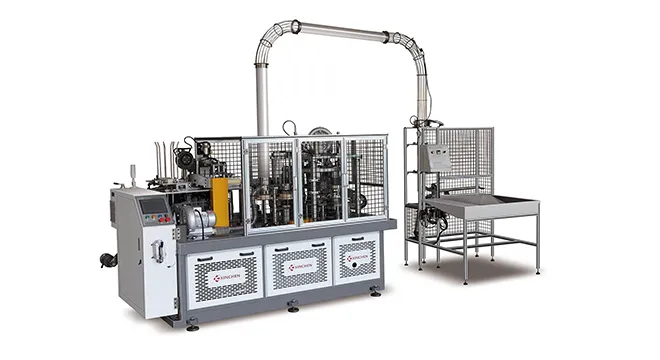
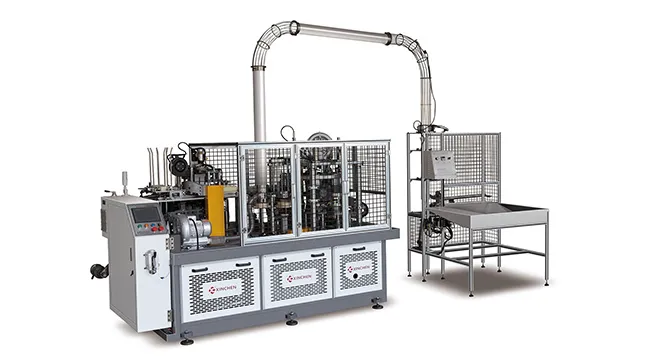
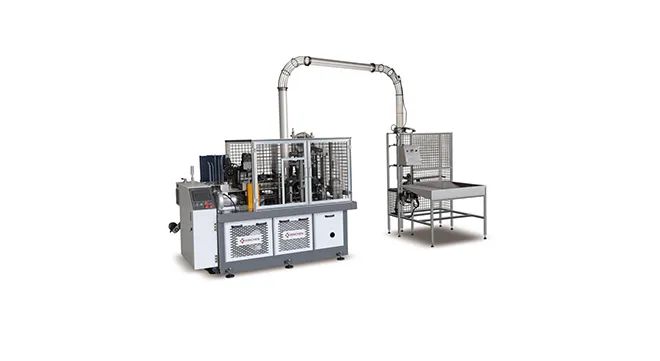
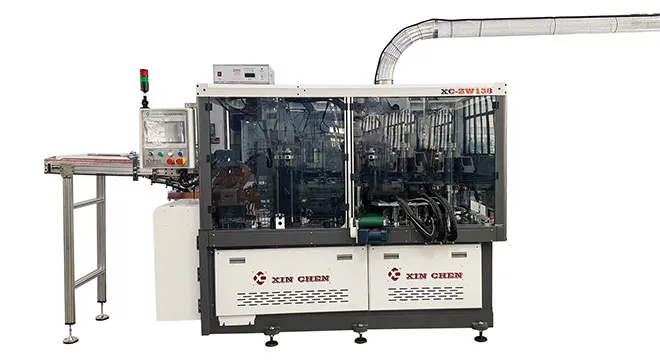
If you’re aiming to move beyond just buying gear and instead want a smoother path to consistent, scalable cup production, it’s worth exploring what XINCHEN has built. Their range of forming equipment is designed around the idea that flexibility and reliability aren’t optional extras — they’re the baseline. From single-lane starter units to high-output multi-station lines, each system is factory-tested with your chosen material before shipping. Discover how XINCHEN’s cup production machinery can shorten your time from warehouse to first shipment.
Disclaimer: This article provides general guidance and does not substitute for professional engineering evaluation. Equipment specifications and performance can vary based on material, cup design, and operating conditions. Always consult with qualified engineers before making capital equipment decisions.